2012年6月4日星期一
Fruit packs
Pinyin name ] [ Dǎ Chó n Gu ǒ
[ alias ] rice soup fruit
[ source ]
Medicine medium source: Myrsinaceae plant dense gear To Ko fruit.
Latin botanical mineral name: Embelia vestita Roxb.[Samaravestita animal Kurz; Embelia prunifolia Mez "
Harvest and storage: the autumn and winter, when ripe, dried in the sun.
[ ] the original morphology of climbing shrubs or small trees,5m higher. The shoots are finely puberulent, lenticellate. Ye Husheng; petiolar long 4-8mm, two sides are slightly wrinkled; leaf firmly papery, ovate to ovate-oblong, dilute elliptic-lanceolate,5-11cm long,2-3.5cm wide, apex acute, acuminate or obtuse, base cuneate or rounded, margin serrulate to serrate, dilute; lateral veins numerous, distinct, with both surfaces uplift of the glands, especially near the edge for. Racemes, axillary, long 2-4cm, are fine hairs; pedicels 2-5mm, was sparsely papillae; bracteoles subulate, ca.1.5mm, ciliate, both surfaces puberulent; take 5numbers, about 2mm long; sepals ovate. The length of about 1.5mm, ciliate; without or with minimal point; petals white or pink, separation, narrowly oblong or oval, ligulate or subspatulate, inside densely papillae, with conspicuous glands; stamens in female flowers degradation, longer than petals 1/ 2, in male flowers extended petals, inserted on2 /5petals, anthers ovate or oblong, back without glands; pistil in female flowers with petals subequal, usually recurved. Fruit globose or slightly flat, about 5mm in diameter, red, with glandular dots. Florescence 10-11 month, fruit period in October to February of next year.
[ ] habitat distribution
Ecological environment : in elevation of 200-1700m limestone slopes under forest.
Resource distribution: distribution in Yunnan.
[ character ] trait distinguishing fruit spherical or slightly oblate, ca.5mm, red, with glandular dots. Stem after tan. Gas, sour, sweet.
[ ] acid taste; flat
[ indications ]. The main ascariasis; tapeworm disease
[ usage]: orally taken decoction,3-9g; or at the end of the inquiry.
Excerpts from" Chinese Materia Medica" [ ]
http://chinese-herbal-medicines-directory.blogspot.com/

Flint grass
[ source ] from" the common Chinese herbal medicines in Tibet".
[ ] Pinyin name Dǎ Huǒ Cǎ o
[ ] Herb of Nepal Pearleverlasting English name
[ alias ] Anaphalis sonic
[ source ]
Medicine medium source: Compositae plant Anaphalis nepalensis entire grass.
Latin animal mineral name: Anaphalis nepalensis ( Spr. ) Hand.- Mazz.[Elichrysum nepalensis Spr.]
Harvest and storage:6-9months after harvest, washed, dried.
[ ] the original morphology of Anaphalis nepalensis perennial is herbaceous, tall 10-30cm. Rhizome slender or slightly thick, up to20(40) cm, fine stoloniferous, densely white lanose, a terminal rosette leaves. Stems erect or obliquely ascending. Ye Husheng; sessile; central lobe oblong or oblanceolate, base slightly clasping, not decurrent leaf or below, all white woolly and stipitate glandular hairs. Capitula1-6corymbose arrangement; the number of spherical involucre, long 8-12mm, wide 15-20mm; involucral bracts8-12mm, wide 15-20mm; involucral bracts8-9layer, FL. radially, the innermost linear-lanceolate, is about full-length 1/3claw; torus bee promoters; female heads outside the multilayer female the3-6, a male; male flower heads are all male, or peripheral1-3female. Achene is cylindrical, long 1mm, with a hairy, crested fold. Florescence 6-9 month, month of fruit period 8-10.
[ ] habitat distribution
Ecological environment : in altitude 2400-4500m mountain slopes, forest margins, ditches and rock.
Resource distribution: located in Shaanxi, Gansu, Sichuan, Yunnan, Tibet and other places.
[ ] taste sweet; flat
[ ] clearing heat and calming the liver functions; cough. The main cold cough; acute and chronic tracheitis and asthma; gas; essential hypertension
[ usage]: orally taken decoction,3-12g.
Excerpts from" Chinese Materia Medica" [ ]
http://chinese-herbal-medicines-directory.blogspot.com/
Dozen arrows.
Pinyin name ] [ Dǎ Jià n J ú
[ alias ] as the new Daisy
[ source ]
Medicine medium source: as the Compositae in small flowers for Huang Ju.
Latin animal mineral name: Pyrethrum tatsienense ( Bur. Et Franch. ) Ling ex Shih [Chrysanthemum tatsienense Bur.et Franch.]
Harvest and storage:8-9 month recovery, removal of impurities, dry.
[ ] the original morphology in little Huang Ju perennial is herbaceous, tall 7-25cm. The rhizomes are remnant sheaths; stems1- several fascicled, white glossy hair. Basal leaves or lower stem leaves and leaf petiole subequal in length; basal leaves numerous, oblong, long 1.5-7cm, wide 1-2.5cm, two lobes pinnatifid, bar or diamond shape; stem leaves alternate, pinnately parted, segments of thin strips subulate, plume axis of substantially equal width; the upper part of undivided or near cleft; all the leaves are sparsely villous or glabrous. Capitate, solitary stems top; involucral diameter 1-2cm; involucral bracts ca.4, entire bract margins dark brown or brown membranous; flower, orange red or orange, tongue tip 3 tooth crack; tubular spendthrift-shaped. Achene ca.3mm,5-8raised longitudinal ribs, crested coronary; at the crested small, round ears a range, with or without pappus. Fruit period7-9 month.
[ ] habitat distribution
Ecological environment : in alpine meadow.
Resource distribution: distribution in Qinghai, Sichuan, Yunnan, Tibet and other places.
[ character ]
Character identification of inflorescence collapse into a group, the diameter is about 10mm. Peduncle slightly bent, of different lengths, longitudinally angular, shall be white mercerized wool, or hair loss in purple. Total hemispherical, bracts numerous,3-4layer, the outer strip lanceolate, abaxially densely white villous. A1layer, tongue much shrinkage, expansion after about 13mm long, apex 3 - tooth crack, orange orange above, below. Tubular flower yellow brown, bisexual,5 stamens, medicine, pistil stigma2 crack, the brush head shape, yellow brown, ovary inferior, no pappus. Lightweight, soft. Gas smell, taste bitter.
Corolla orange to orange red, fragrant air is preferred.
Microscopic identification of characteristic: Brown powder. ①pollen grains circle is globose, diameter 24-28( -31)μ m, brownish yellow, with 3apertures, germinal furrow, outer edge spiny. The pollen sac wall cell oval or long oval, wall with point v, strip or spiral thickening. The bracts epidermis cell polygon, stomatal infinitive, accessory cell3-4. The non glandular hair by 4-7cell composition, bending, with yellowish brown trait, apical cell is longer. The glandular head consists of 2-8cells, stem short, consisting of 2cells.
[ ] the chemical composition of inflorescence contains flavone, amino acids, organic acids, alkaloids, in addition, aldehydes and ketones showed positive reaction.
[ ] physicochemical identification identification of take the powder 2G,2% of sodium carbonate solution25ml, shaking, placed30min, filtration, the filtrate with dilute hydrochloric acid ( pH4-6),15ml extraction with ether, diethyl ether, depending on the water bath liquid, dry, residue and absolute alcohol dissolved 1ml, displacement of test tube, plus methyl red indicator1 drops, namely, marked in red.
[ ] taste bitter cold;
[ indications ] blood stasis; pain relief. The main traumatic injury cell back pain; headache;
[ usage]: orally taken decoction,3-9g.
Excerpts from" Chinese Materia Medica" [ ]
http://chinese-herbal-medicines-directory.blogspot.com/
Rice flower
[ source ] from the" Guizhou folk medicine".
[ ] Pinyin name Dǎ M Hu ì Jiā
[ English ] Root or herb of Snowcreeper name Porana
[ alias ] Malang flower, Shiraka To, small gold, Xiaoshi rattan, rattan wing.
[ source ]
Medicine medium source: dicotyledonous plants for medicine Convolvulaceae wing calyx cane or herb.
Latin botanical name: Porana racemosa Roxb. animal fossil
Harvest and storage: summer and autumn harvest, removing impurities, shredding, fresh or dried.
[ ] the original morphology of climbing shrubs, up to10m. Stems twining, herbaceous, cylindrical, more or less be yellow hirsute when young, later with tubercles or glabrous. Leaves alternate; petiole is long5-11cm, was sparsely hairy to hairless; come piece ovate, long 6-11cm, wide 5-10cm, apex acuminate or caudate, with obtuse or acute tip, base deeply cordate, two sides is close to the sparsely pilose; palmately veined base,7-9, panicles axillary; bracts leaflike, amplexicaul, bracteoles subulate; pedicel3-6mm long; sepals 5, linear-lanceolate, usually pilose, when all increased, with oblong spatulate; corollaceous funnel shape, white with yellow, tube, glabrous,5lobed to middle, lobes spreading, oblong; stamens 5, included, filaments short in anther; ovary glabrous, style 1, stigma clavate,2 crack. Capsule ovate, long 7-8mm, with small short cusp, glabrous. Seed 1, ovate, ca.6mm, dark brown or black, smooth. Florescence in September.
[ ] habitat distribution
Ecological environment : in limestone mountain shrub in.
Resource distribution: located in Shaanxi, Gansu to the south of the Yangtze River around the.
[ character ] trait distinguishing the grass multiple wound into a regiment. Elongated cylindrical stem, yellow green, puberulous, qualitative fragile brittle. Leaf blight of green, alternate, more complete collapse, flattened oval or wide egg form, long 3-9cm, apex acuminate, base cordate, margin entire, both surfaces pilose, qualitative fragile brittle. Sometimes visible inflorescence, flower sticks, yellowish white, moist expansion is funnel-shaped, apex 5 - lobed, lobes elliptic. Gas light.
[ ] taste temperature; SIM
[ ] the lung meridian
[ ] table functions; Qi; promoting blood circulation; detoxification. The main cold; food stagnation abdominal distension; innominate toxic swelling
[ usage]: orally taken decoction,9-15g. External: amount, trace and apply.
Excerpts from" Chinese Materia Medica" [ ]
http://chinese-herbal-medicines-directory.blogspot.com/
Anemone hupehensis
This product is Ranunculaceae anemone hupehensis Anemone hupehensis Lem. entire grass. ( British) Hupeh Anemone Herb
Alias: wild cotton, autumn peony, cat's claw.
Plant morphology : perennial is herbaceous, tall 30 ~100cm. Roots conic, lignification, dark brown. Basal leaves Youchang handle, three leaves, a few simple; leaflets ovate,4 to 11cm in length, width 3 ~10cm, not to split or not apparent 3~ 5lobed, margin coarsely serrate, sparsely short below. Flowering stems tall 20 ~80cm, was sparsely hairy, cymes few or 2~ 3disambiguation branch; involucral bracts 2to 3, a handle, leaflike; sepals 5, purplish red, outside densely pubescent; stamens numerous; carpels numerous, densely pilose. Aggregate fruit globose, densely woolly achenes. Florescence 7 ~ October.
Born in upland, low grassy slope, ditch. Located in the southwest.
Sampling: summer, autumn stems leafy when the excavation, removal of sand.
Chemical composition: containing anemonin ( anemonin ) and three triterpenoid saponins.
Taste: cool, bitter taste; a small drug.
Medical network www.PharmNet.com.cn finishing
Functions: clearing heat and removing dampness, Qi, insecticidal. The carbuncle, furuncle, for tinea.

http://chinese-herbal-medicines-directory.blogspot.com/
Alias: wild cotton, autumn peony, cat's claw.
Plant morphology : perennial is herbaceous, tall 30 ~100cm. Roots conic, lignification, dark brown. Basal leaves Youchang handle, three leaves, a few simple; leaflets ovate,4 to 11cm in length, width 3 ~10cm, not to split or not apparent 3~ 5lobed, margin coarsely serrate, sparsely short below. Flowering stems tall 20 ~80cm, was sparsely hairy, cymes few or 2~ 3disambiguation branch; involucral bracts 2to 3, a handle, leaflike; sepals 5, purplish red, outside densely pubescent; stamens numerous; carpels numerous, densely pilose. Aggregate fruit globose, densely woolly achenes. Florescence 7 ~ October.
Born in upland, low grassy slope, ditch. Located in the southwest.
Sampling: summer, autumn stems leafy when the excavation, removal of sand.
Chemical composition: containing anemonin ( anemonin ) and three triterpenoid saponins.
Taste: cool, bitter taste; a small drug.
Medical network www.PharmNet.com.cn finishing
Functions: clearing heat and removing dampness, Qi, insecticidal. The carbuncle, furuncle, for tinea.
http://chinese-herbal-medicines-directory.blogspot.com/
Calystegia hederacea
[ ] Pinyin name Dǎ Wǎ n Hu.
[ alias ] face vine, small bindweed, disc intestinal reference, paving.
[ source ] to Convolvulaceae Calystegia plants of Calystegia sepium Calystegin hederacea Wall., rhizome and flowers. Autumn grubbing rhizomes, and use fresh or dried. Summer flowers fresh.
[ ] sweet taste, thin, flat.
[ indications ]
Rhizome: strengthening the spleen and replenishing qi, diuresis, menstruation, only; for deficiency of dyspepsia, irregular menstruation, leucorrhea, galactic and exiguous.
Flowers: pain; external use in treating toothache.
[ usage] rhizome1~ 2two, flower topical amount.
[ ]" from the compilation of Chinese herbal medicine"
http://chinese-herbal-medicines-directory.blogspot.com/
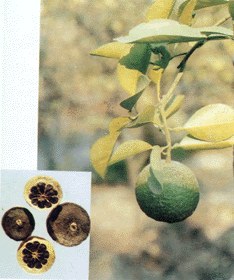
Sour orange Poncirus trifoliata
This product is Rutaceae family plants from generation to generation Citrus aurantium L.var.amara Engl. fruit. ( British) Bitter Orange Fruit
Alias: generation, generation, Su trifoliate orange circle.
Plant morphology: small evergreen trees, branches sparsely short spines, the edges and corners. Leaves elliptic to ovate-oblong,5 to 10cm in length, width 2.5 ~5cm; petiole is long 2~ 2.5cm, obcordate leaf wing. Flowers in racemes; calyx 5 crack, lobes ovate; flowers white, petals 5, grow 2 ~2.5cm; staminal 21 ~24,3 ~5binding constant. Fruit oblate, diameter of 7~ 8cm, not fragrant. Florescence 5 ~ June, fruit maturation period in December.
Cultivation in low hill areas or hilly. Production of Jiangsu, Zhejiang.
Processing:7 ~August harvesting immature green fruit, since the mid cut into two halves, dried or dried.
Traits: after processing the medicinal material forms a hemispherical shape, diameter 3 ~4cm; surface yellow green or grayish yellow brown, with reticulate wrinkles, fruit Bingji there are remnants of persistent calyx; outer layer of pericarp thickness0.5~ 1cm, slightly outwards, and9~ 11capsular flaps, each flap has the unripe seed1 to the number of grains, axial width 4- 8mm. Bitter acid.
Chemical composition: volatile oil, limonene and Lord, containing capric aldehyde, nonanal, twelve PHAs, linalyl acetate ( linalyl acetate ), acetate neryl acetate ( nerolyl acetate ), acetic acid ester ( geranyl acetate ) dragon cattle; the other contains hesperidin, neohesperidin ( hesperidin ) ( neohesperidin ).
Medical network www.PharmNet.com.cn finishing
Taste: slightly cold, bitter, sour.
Functions: gas line width, Xiaoshi, phlegm. For thoracic and abdominal pain, nausea, phlegm, prolapse of weak.
http://chinese-herbal-medicines-directory.blogspot.com/
订阅:
博文 (Atom)